Bedding guide
Linen Sheets Decoded: How Weight, Weave, and Fit Shape Everyday Comfort
Linen has a reputation for relaxed elegance, but the best set for your bed is about more than a lovely rumple. Fabric weight, weave, mattress fit, and care all influence how sheets feel from the first night through years of washing. Here’s how to read those details—and choose with confidence.
First, what makes linen feel like linen?
Linen is made from flax fibers, which are spun into yarn and woven into fabric. Compared with the smooth, close-knit feel many people associate with cotton sheets, linen often has a more textured surface and a relaxed drape. It may feel pleasantly crisp at first, then become more supple with regular use and laundering. That change is part of its appeal: linen tends to settle into a lived-in character rather than staying perfectly sleek.
The word “linen” alone, however, doesn’t tell you precisely how a sheet will feel. Fiber quality, yarn preparation, fabric weight, weave, washing or garment-finishing, and construction all play a part. Two sheets can both be 100% linen and still feel noticeably different in your hands and on your bed.
That’s why a useful sheet-buying guide starts with the details, not a single headline claim. Weight can offer clues about body and drape, but it doesn’t work as a stand-alone quality score. Weave and finishing influence texture, while a correctly sized fitted sheet can make the difference between a smooth, secure bed and a corner that pops loose before morning.
Fabric weight: airy, substantial, or somewhere in between?
Linen fabric weight is commonly listed in grams per square metre (gsm) or ounces per square yard. These figures describe the mass of a given area of fabric. They can help you compare options, especially when you’re looking at similar products, but they don’t predict comfort all by themselves. Yarn thickness, weave density, finishing, and the type of flax fiber also affect the final hand.
In general, a lighter linen may feel more airy and fluid. It can be an appealing choice if you like bedding that feels less substantial or if you tend to sleep warm. A heavier linen may have more body and a weightier drape, which some people find comforting. Yet “heavier” doesn’t automatically mean “better,” just as “lighter” doesn’t necessarily mean delicate or poorly made. The right choice depends on the feel you enjoy and how you use your bed.
Use a listed weight as a comparison point rather than a verdict. If a product page gives a figure, check whether it is stated in gsm or ounces per square yard, and avoid comparing numbers until the units match. Some labels describe the weight of the finished fabric; others may present information in a way that makes direct comparison less straightforward. When the listing leaves the measurement unclear, ask the seller or treat the number cautiously.
Also consider the full bedding setup. A light sheet under a thick duvet can feel different from the same sheet paired with a lightweight blanket. Room temperature, pajamas, personal preference, and whether you share the bed all shape your experience. A sheet doesn’t need to solve every temperature concern on its own.
- Choose lighter-feeling linen if you prefer a softer, airier layer with less fabric weight.
- Consider a more substantial fabric if you enjoy a noticeable drape and a sheet with more body.
- Compare like with like: look at weight alongside weave, finishing, and care instructions instead of treating one number as a quality rating.
When possible, feel a fabric swatch or handle a sample before buying. A weight specification can narrow the field, but your hand is the final judge of whether the texture feels inviting.
Weave and texture: the details you feel every night
Weave describes how yarns cross one another to form fabric. It affects the surface, structure, and way a sheet hangs. Linen sheets are often valued for their visible texture and natural irregularities, but the precise effect varies. A looser construction may read as relaxed and breathable; a more compact weave may feel a little more contained. Neither description alone guarantees a particular level of softness or durability.
Look for practical details in a product description: Does it identify the fabric as 100% linen? Is the weave or finish described? Is the linen washed or garment-washed? Are the origin of the flax and the place of weaving provided? These details help you understand what you’re comparing. They don’t replace independent evidence of quality, but clear information gives you a better basis for a decision.
Finishing matters because it can change the fabric’s feel before it reaches your home. Stone washing or garment washing, for example, may give linen a more relaxed hand from the start. A sheet without that kind of finish may feel crisper initially. In either case, follow the label’s care advice: aggressive washing, high heat, or harsh chemicals can affect the fibers and shorten the life of bedding.
Don’t confuse natural texture with a flaw. Linen may have small variations in its yarns and surface that are characteristic of the fiber and construction. At the same time, loose threads, damaged seams, or uneven dimensions are not simply “linen character.” If something seems wrong, consult the maker’s quality and return guidance.
Thread count is often used in cotton bedding comparisons, but it is not a simple shortcut for evaluating linen. Linen yarns and weaves differ from the cotton fabrics for which thread-count claims are commonly emphasized. For linen, the fiber, fabric weight, weave, finish, workmanship, and feel together offer a more useful picture.
Fitted-sheet depth: measure before you make the bed
A sheet can be beautifully made and still be frustrating if it doesn’t fit. The key measurement is the mattress’s actual depth, not just whether the label says “queen” or “king.” Mattress height varies, and a topper or pad adds extra inches. Measure from the bottom edge to the top surface, including any layers that will stay on the bed beneath the sheet.
Next, check the fitted sheet’s pocket depth. A pocket is the fabric designed to wrap around the mattress edges. Some listings give the depth directly; others use terms such as “deep pocket.” When possible, use the stated measurement rather than relying on that phrase alone. Compare it with your complete mattress height and allow for enough fabric to tuck securely beneath the corners.
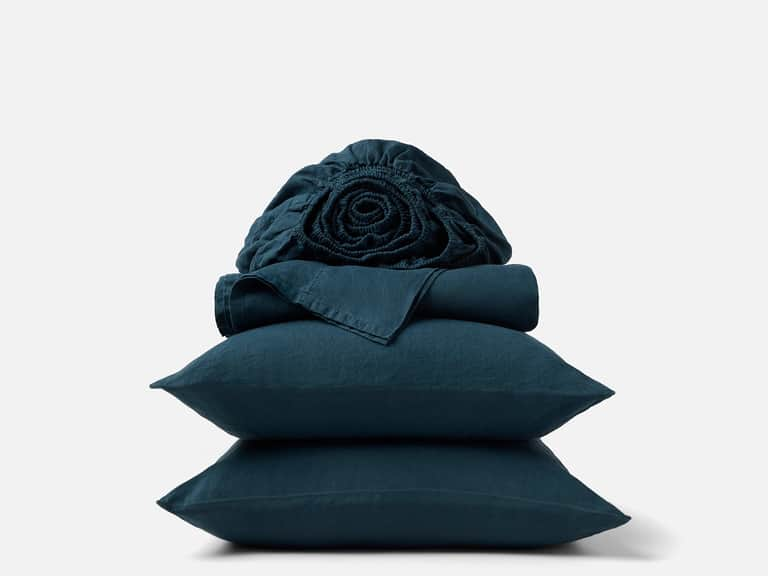
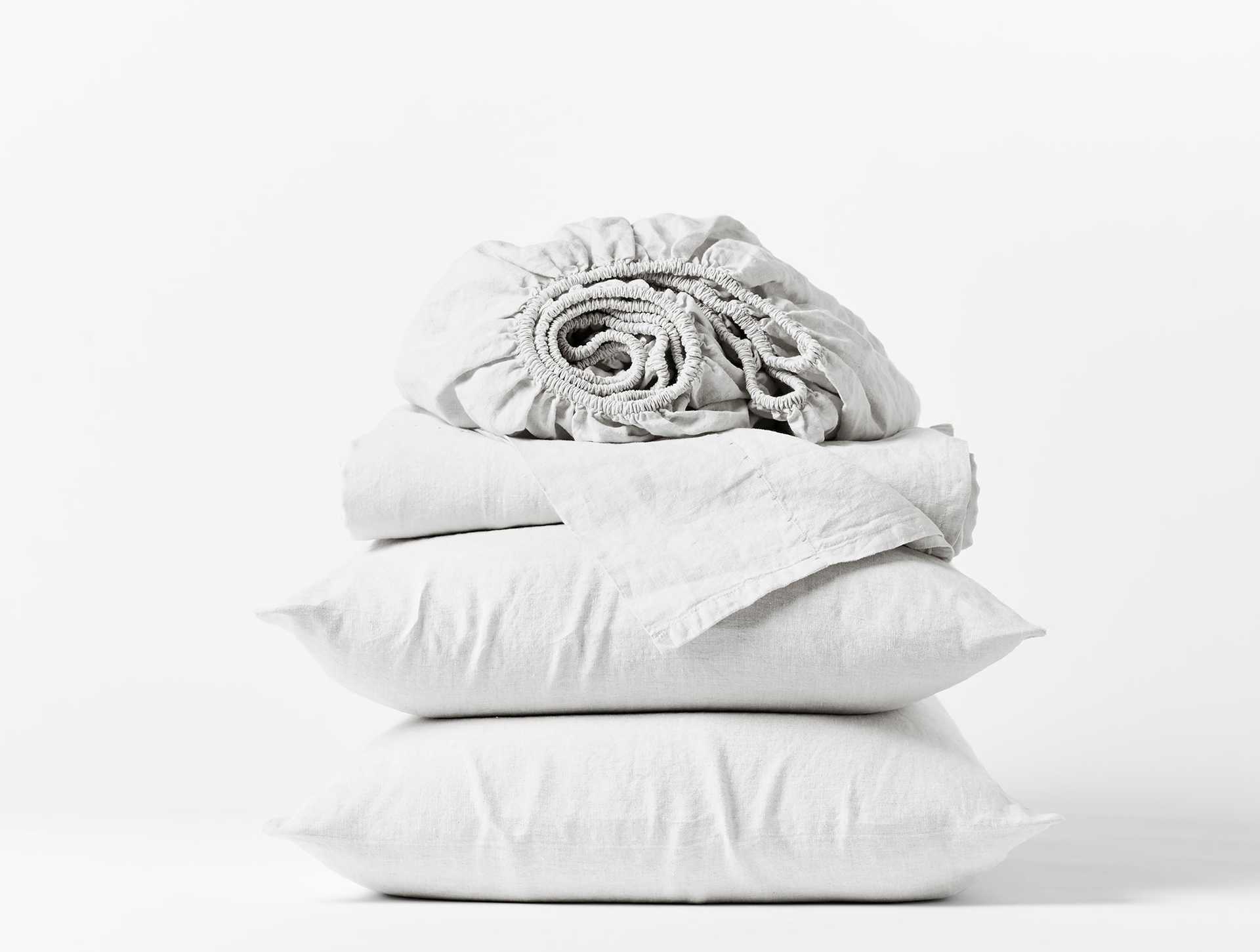
For example, several Organic Relaxed Linen sheet-set descriptions specify a fitted-sheet pocket depth of 15 inches and full elastic around the edge. That gives shoppers a useful measurement to compare with their own beds; it doesn’t mean that every 15-inch pocket will suit every mattress setup. Check the sheet’s size options and product details before deciding. You can review one example in the Organic Relaxed Linen Sheet Set description.
Full elastic can help a fitted sheet stay in place, but fit still depends on dimensions, corner construction, and how much mattress you need to cover. If the sheet is too shallow, the corners may pull upward or spring free. If it is much too deep, excess fabric can bunch underneath and feel uneven. A good fit should lie smoothly without requiring a tug-of-war every time you remake the bed.
Before ordering, check the mattress size, depth, and the sheet’s stated dimensions. If you have a thick topper, adjustable base, or unusually tall mattress, contact the seller if the listing doesn’t answer your question. Keep the packaging and tags until you’ve checked the fit, and follow the retailer’s return policy.
How to compare sheet sets without getting lost in the details
Shopping can turn into a maze of adjectives: “luxurious,” “cooling,” “soft,” and “all-season” appear frequently, but those words don’t always tell you how a particular fabric is made. Start with specifications you can verify, then use descriptive language as context rather than proof.
- Confirm the fiber content. Check whether the sheets are 100% linen or a blend. A blend can be perfectly suitable, but it may behave differently from pure linen.
- Look for fabric weight and units. Use weight as one comparison point, not as a quality ranking.
- Read the weave and finish description. Washed linen may feel more relaxed from day one; unwashed fabric may begin with a firmer hand.
- Measure the bed. Include your mattress protector and topper when checking fitted-sheet depth.
- Check what the set includes. Confirm the number and size of pillowcases, plus whether the set contains a flat sheet.
- Review the care label before buying. A fabric that needs a laundry routine you won’t follow may not be the best everyday choice.
It can also help to decide what you dislike most about your current sheets. Do they feel too slick, too crisp, too warm, or difficult to keep tucked? Naming the problem makes it easier to focus on relevant features instead of trying to find a mythical set that excels at everything.
Care that protects the fabric—and your time
Linen can be a practical everyday textile, but good care starts with the instructions supplied for the specific item. Recommendations differ between products and finishes. Some linen sheet sets call for cold water on a gentle cycle, washing with similar colors, and low tumble drying. Other linen products may allow warmer water. Follow the care label rather than applying one rule to every linen fabric.
In general, avoid overcrowding the washing machine. Sheets need room to move and rinse properly. Use an appropriate amount of detergent; excess soap can leave residue, while bleach or harsh whiteners may damage or discolor fabric unless the care instructions explicitly permit them. Skip fabric softener if the manufacturer advises against it. Residue can alter the surface feel, and a softer result isn’t always worth the trade-off.
Remove sheets promptly after washing and avoid over-drying. High heat can be tough on fibers, so a lower setting or line drying may be preferable when the product instructions allow it. Linen can be used with its naturally relaxed texture; if you prefer a smoother finish, check whether ironing is permitted and follow the recommended temperature. Slightly damp fabric may be easier to press, but always confirm the maker’s guidance first.
Wash bedding when it needs freshening according to your household routine, and address stains as soon as practical. Blot rather than rub a fresh spill, and test any stain treatment in an inconspicuous area if the care label allows treatment. Different stains require different approaches, so a universal remedy may do more harm than good.
Storage is simple: make sure sheets are fully dry before folding them away, and store them in a clean, dry place. Allowing bedding to dry completely helps prevent stale odors. If you have more than one set, rotating them gives each set time out of regular use and makes laundry day less of a scramble.
A practical word about sustainability claims
Linen comes from flax, a natural fiber, but a natural origin by itself does not tell the whole environmental story. Farming practices, processing, dyeing, finishing, transport, product lifespan, and disposal all matter. Claims about sustainability are most useful when they are specific enough to check.
If a sheet is described as organic or certified, look for the named certification and understand what scope it covers. For instance, a product listing may identify GOTS certification. Certification can provide information about particular parts of a supply chain, but it should not be treated as a blanket guarantee about every environmental or labor issue. Read the certifier’s explanation and the product’s own documentation.
Durability and care are part of the practical picture, too. A well-used sheet that remains in service for years may avoid frequent replacement, while an item that is poorly cared for may wear out sooner. Choose bedding you genuinely like enough to use and maintain, and avoid buying extra sets simply because a fabric is marketed as a responsible choice.
Clear sourcing information can also help you form a more complete view. Some product descriptions state where the flax was grown and where the linen was woven. Those details are useful context, but they are not, on their own, a full assessment of environmental impact. Be wary of sweeping claims that offer no supporting information.
Common linen-sheet questions, answered
Are heavier linen sheets better quality?
Not necessarily. Weight tells you about the mass and, often, the general body of the fabric. Fiber quality, weave, finishing, sewing, and how the sheet feels to you matter as well. Compare weight alongside those details instead of treating it as a score.
Will linen sheets soften?
Many linen sheets become softer with use and washing, although the pace and final feel depend on the fabric and its finish. Follow the care label and avoid harsh treatment in an attempt to speed up the process.
How deep should a fitted sheet be?
Measure your mattress with any topper or protector in place, then compare that total height with the listed pocket depth. If the product page does not provide a clear measurement, ask the seller before ordering.
Is a looser weave always cooler?
Airflow is influenced by weave, fiber, finishing, and how the fabric is used. A loose weave may feel airy, but the word alone cannot promise a particular sleeping temperature. Personal comfort also depends on your room and bedding layers.
Do linen sheets need ironing?
No. Many people enjoy linen’s relaxed creases as part of its look. If you prefer a smoother finish, check the care instructions to see whether ironing is allowed and at what setting.
The bottom line: shop for the bed you actually have
The most satisfying linen sheet choice is rarely the one with the biggest number or the most dramatic description. It’s the set whose texture feels right, whose weight suits your preferences, whose fitted sheet matches the real height of your mattress, and whose care instructions make sense for your household.
Keep the comparison grounded: check fabric content, read the weight in context, look for information about weave and finishing, and measure before buying. Then give the sheets the care their label recommends. Those small, practical steps make it easier to find bedding that feels comfortable night after night—and stays a welcome part of your routine for longer.